
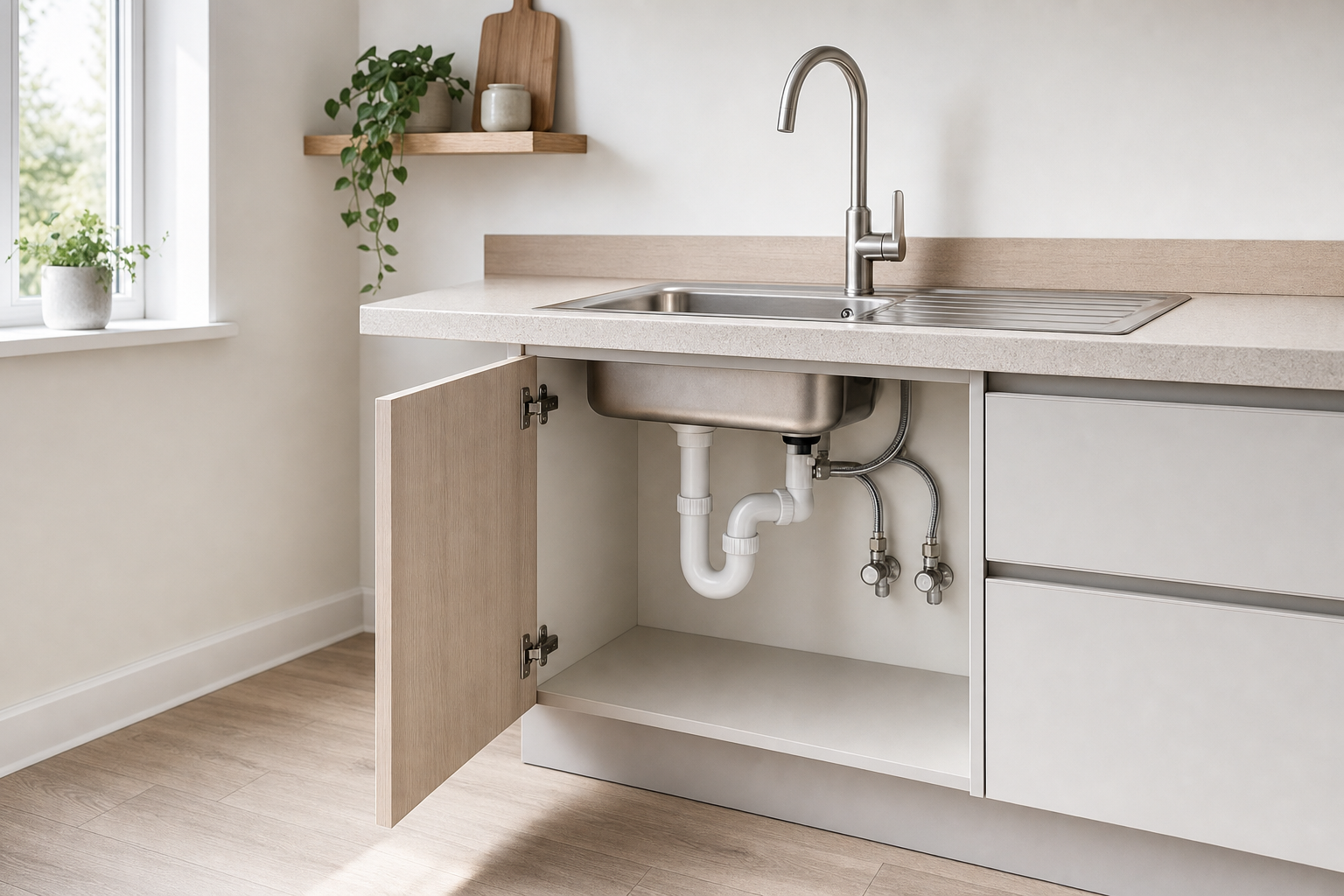
What helps kitchen repairs last
Cabinet leaks properly traced
We look past the damp patch and check the fitting or joint behind it.
Repairs for tight spaces
Restricted access is worked through carefully rather than rushed.
Tested for flow and drainage
The sink setup is checked in use before the job is treated as done.
Kitchen faults rarely stay neatly in one place
Kitchen plumbing faults often hide in cramped cupboards until the smell, damp or warped shelf gives the game away. We deal with problems around sinks, taps, wastes, traps, isolation valves and appliance water connections by tracing the symptom back to the fitting that is actually failing. That might be moisture in the cabinet, a slow drain, a dripping tap or a leaking hose feeding an appliance. When you call S O plumbing, details about the sink setup and what you have noticed underneath can help us judge likely access and what sort of repair may be needed.
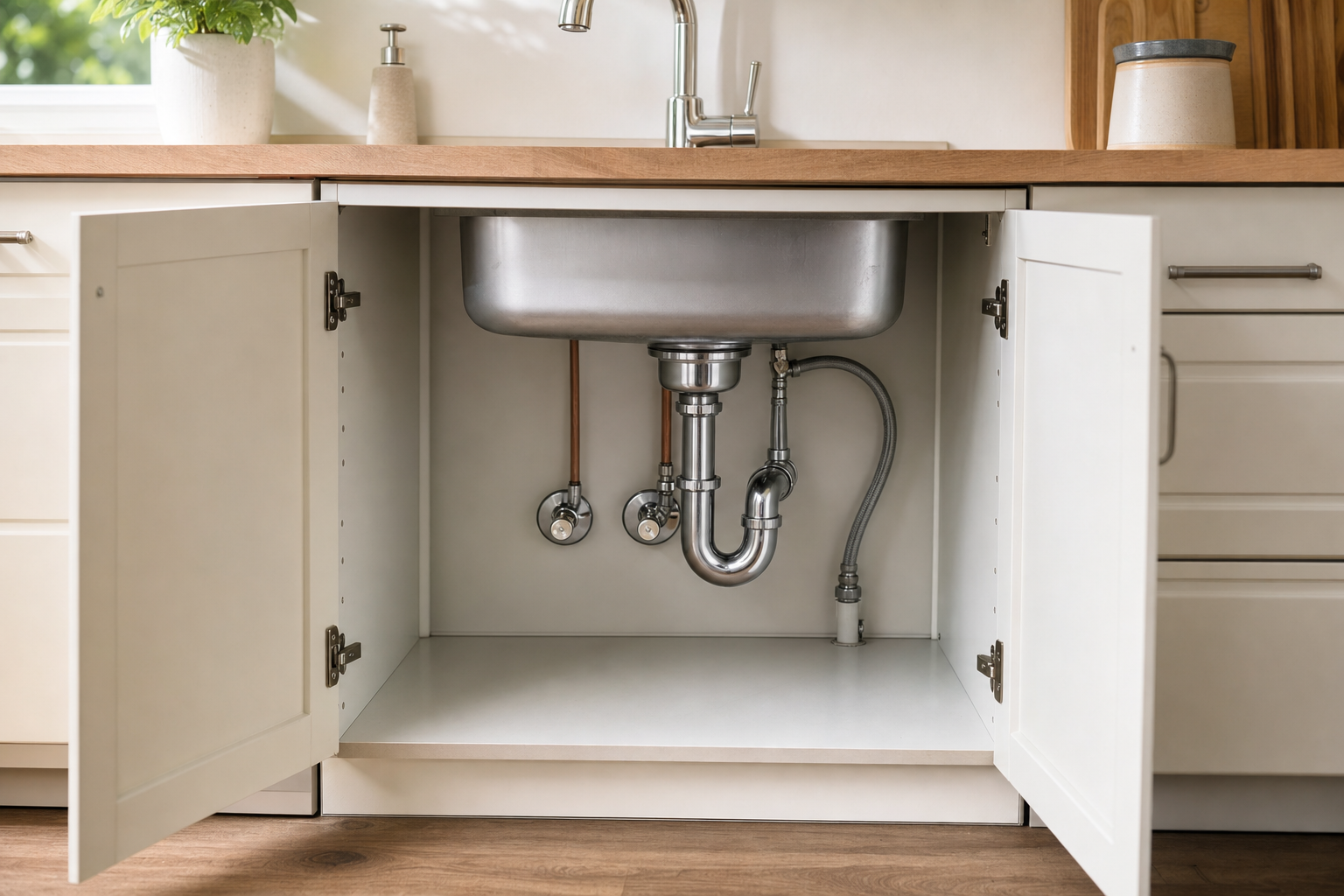

Tight spaces still need proper checks
Working under a kitchen sink is rarely anyone's idea of elegant engineering, but it does need care. We inspect the immediate cabinet and nearby units for signs of escaped water, then repair or replace the parts that are causing the trouble. That may mean resealing joints, changing a trap or valve, renewing a flexible connection or repairing accessible pipework. A visit from S O plumbing ends with flow, drainage and leak checks so the sink and any connected plumbing are working together properly, not just looking dry for thirty seconds.
Frequently asked questions
Can you repair leaks under the kitchen sink?
Yes. Under-sink leaks can come from wastes, traps, taps, valves, flexible hoses or accessible pipework, and they are not always leaking from the place that first looks wet. We inspect the likely fittings in a sensible order and then explain the repair that fits the actual fault.
What details help before the visit?
It helps to know whether the issue is a drip, a slow drain, moisture in the cabinet or a problem with an appliance water connection. If you can clear the cupboard and make the isolation valves easier to reach, that usually saves time and makes the visit more productive.
Do you check appliance water connections too?
Yes, where the fault points that way. A leaking or worn supply hose can be responsible for cabinet moisture, especially when it sits behind or beside a machine. We inspect the connected fittings and explain whether a reseal, valve change, hose renewal or another repair is the sensible fix.