
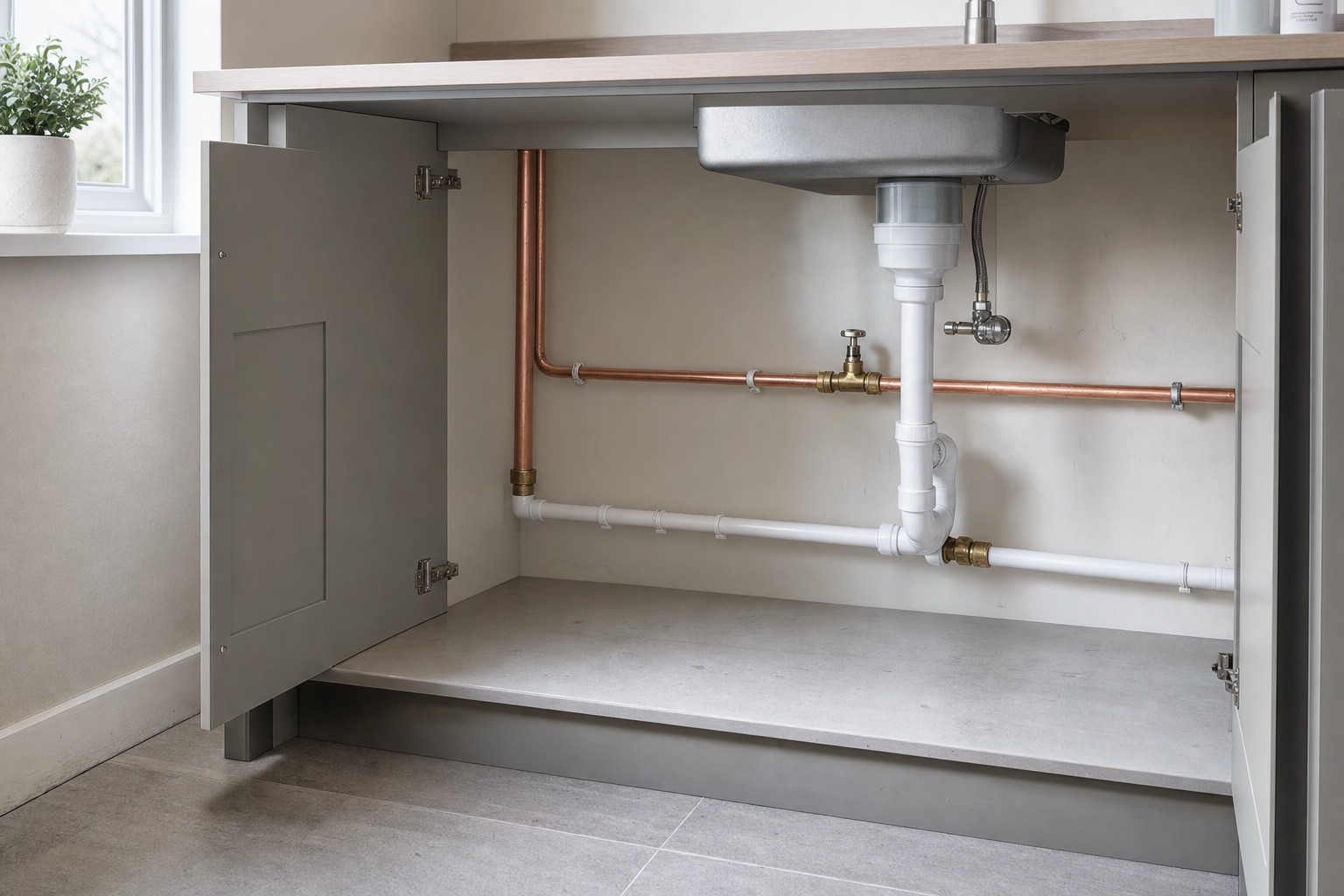
What matters with leak detection
Source before surface
We trace the leak back to what is failing instead of treating the mark alone.
Logical fault checks
Fittings, seals, joints and pipe runs are checked in a sensible order.
Early action helps
Catching the fault sooner can mean less damage and less disruption later.
Finding the source, not chasing the stain
A leak is rarely improved by ignoring the stain and hoping it dries on its own. We track visible and suspected water leaks by checking the fittings, joints, valves, seals and accessible pipe runs most likely to be responsible. You might have a damp patch, moisture around a unit, a loss of pressure or the steady sound of running water with no obvious cause. When you bring S O plumbing in early, we can look for the source before a small escape turns into damaged plaster, swollen cabinets or flooring that has finally had enough.


Repair matched to the cause
Once the source is narrowed down, we choose the repair that fits the fault rather than treating every leak the same way. That may mean tightening or resealing a connection, replacing a failed part or repairing or renewing a damaged pipe section. A visit from S O plumbing is about finding the real cause, not just drying the surface and pretending the job is done. If you can point out when the damp first appeared, what fixtures are nearby and whether water use changes the symptom, we can work through the possibilities far more quickly.
Frequently asked questions
Can you help if I cannot see the leak itself?
Yes. Some leaks show up as damp, staining, pressure loss or a quiet running-water sound rather than a clear drip. We work through the most likely fittings and accessible pipework to narrow down the source, then explain what repair is needed and what can be reached directly.
What signs suggest a hidden water leak?
Recurring damp patches, unusual moisture around a unit, a drop in water pressure, mould in one stubborn area or the sound of water when nothing is running can all point to a leak. Those clues help us decide where to start looking rather than guessing and chasing symptoms.
Will you repair the leak once it is found?
That is the aim whenever the source and access allow it. Once we identify what has failed, we can explain whether the fix is a reseal, a replacement part, a pipe repair or a longer section renewal. If wider access or follow-on work is needed, we will say so clearly.