

What matters with sink work
Repair first if sensible
A seal, waste or fixing may save the sink if the main unit is still sound.
New sink checked for fit
Size, tap holes and waste alignment are reviewed before fitting begins.
Support surfaces inspected
We check for water damage before the new sink is fixed into position.
Repair the sink if it still has life in it
Not every sink problem means starting again from scratch. We deal with leaking wastes, damaged seals, loose fittings, cracked sinks, unstable mounting and awkward connections that no longer line up as they should. After inspection, we can often tell whether changing a waste, trap, seal or fixing will keep the existing sink in service, or whether the sink itself has become the weak point. When you use S O plumbing, the aim is not to sell replacement for the sake of it, but to judge what will leave you with a secure, usable setup rather than a repeat problem.
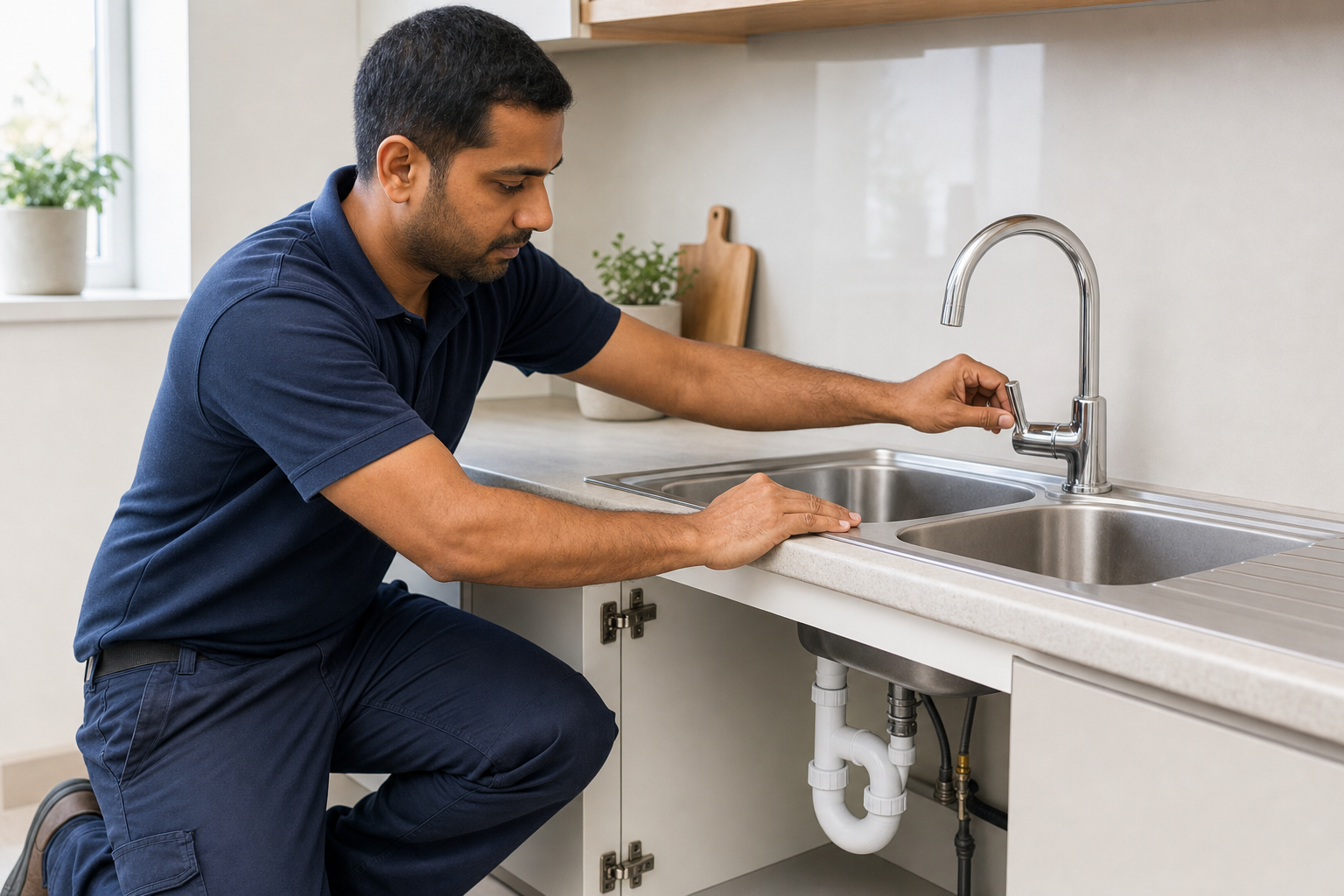

Choose the new sink with the opening in mind
If replacement is the better answer, the practical details matter. We look at dimensions, tap-hole layout, overflow position, waste alignment and how the sink needs to sit on the worktop or vanity unit. The old sink is disconnected and removed, the opening is prepared and the new sink is fitted, sealed and tested. Work with S O plumbing also includes checking the cabinet or supporting surface for water damage before the new sink is secured, because there is no point fixing a fresh sink onto a base that has already given up underneath.
Frequently asked questions
Can my existing sink be repaired?
Often, yes. If the issue is with the waste, trap, seals, fixings or a loose connection, repair may be the sensible route. If the sink is cracked, unstable or too damaged to rely on, replacement is usually the better answer. Inspection tells us which side of that line it sits on.
What matters when choosing a replacement sink?
The key points are size, tap-hole configuration, overflow position, waste alignment and how the sink fits the existing worktop or vanity unit. Those details decide whether the new sink is a clean fit or the start of a mismatch. A little checking now saves a lot of annoyance later.
Will you check for cabinet damage?
Yes. If a sink has been leaking for a while, the cabinet or support surface underneath may already be swollen, softened or unstable. We look at that before securing the new sink, because the finished job needs proper support as well as watertight connections.